When you click on links to various merchants on this site and make a purchase, this can result in this site earning a commission. Affiliate programs and affiliations include, but are not limited to, the eBay Partner Network.
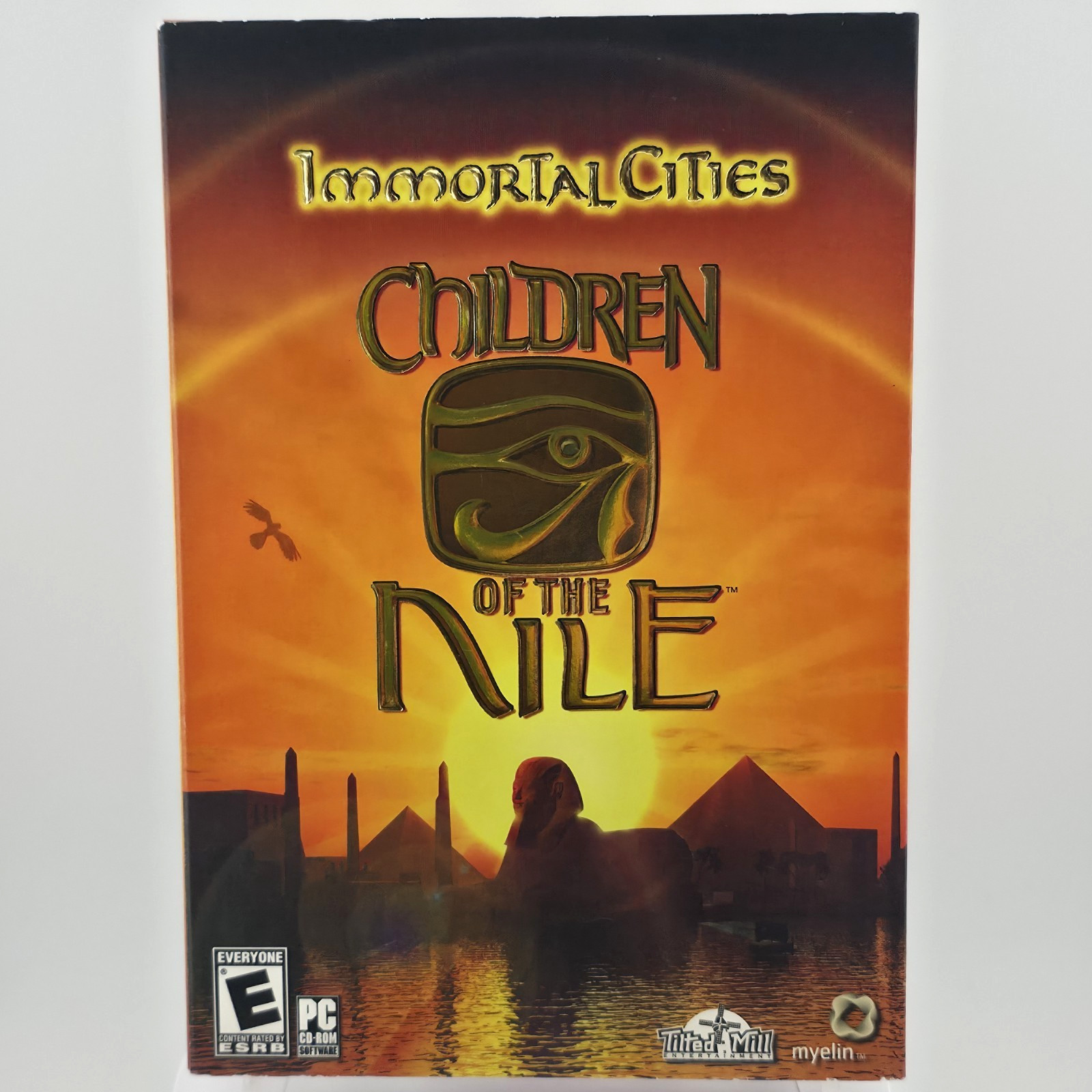
Experience Immortal Cities: Children of the Nile, developed by Tilted Mill Entertainment and published by Myelin Media on October 6, 2004. You lead an ancient Egyptian society by laying out neighborhoods, industries, temples, and civic infrastructure while watching a living population navigate daily life. The core loop is planning districts, securing food and resources, and tuning production chains so growth feels steady rather than chaotic. Citizens behave as individuals with their own routines, so your job becomes guiding the city’s systems while responding to shifting needs, labor flow, and prestige demands. As prosperity rises, you push toward monumental goals, balancing practical logistics with the long-view ambition of building a legacy.
The city-building lineage behind Immortal Cities: Children of the Nile draws clear inspiration from Pharaoh and Caesar III, carrying forward the pleasure of grid planning, supply chains, and neighborhood design that turns empty land into a working society. It takes that foundation and emphasizes simulation-forward population behavior, where outcomes feel driven by how people move and interact rather than only by abstract meters. In the genre’s later evolution, it strongly aligns with modern builders like Cities: Skylines and survival-leaning management games like Banished, where citizen behavior and logistics create stories from ordinary routines. The throughline is “systems made visible”: build the framework, watch the simulation breathe, then iterate as small choices cascade into big results. That blend of macro planning and micro behavior is what keeps the pacing addictive and the decision-making meaningful.
For collectors, Immortal Cities: Children of the Nile fits beautifully as a centerpiece for a historical city-building row, especially if you like PC strategy that feels both deliberate and alive. It pairs naturally alongside Pharaoh and Zeus: Master of Olympus, creating a cohesive “ancient world” shelf run that highlights the genre’s golden-era identity. It also complements broader builders like SimCity 4 and economy-forward classics like Caesar III, rounding out a timeline from traditional city-planning to deeper citizen simulation. If you organize by design lineage, it sits comfortably next to Caesar IV as a modern-feeling neighbor in the same strategic orbit. As a single entry, Immortal Cities: Children of the Nile fills the gap between classic impression-style planning and the more simulation-driven direction the genre would lean into later.
Disclaimer: This game is sold as-is and is intended primarily for collectors. Due to its age and packaging, functionality cannot be guaranteed. By purchasing this item, you acknowledge and accept the condition as shown in the provided photos (and video, if available). Please review them carefully, as there may be defects or imperfections not immediately visible to everyone. All packages are insured, sealed in a cellophane bag, wrapped in bubble wrap, and shipped in a box for maximum protection. If you have any questions or need additional information about the item's condition, please ask before making your purchase.