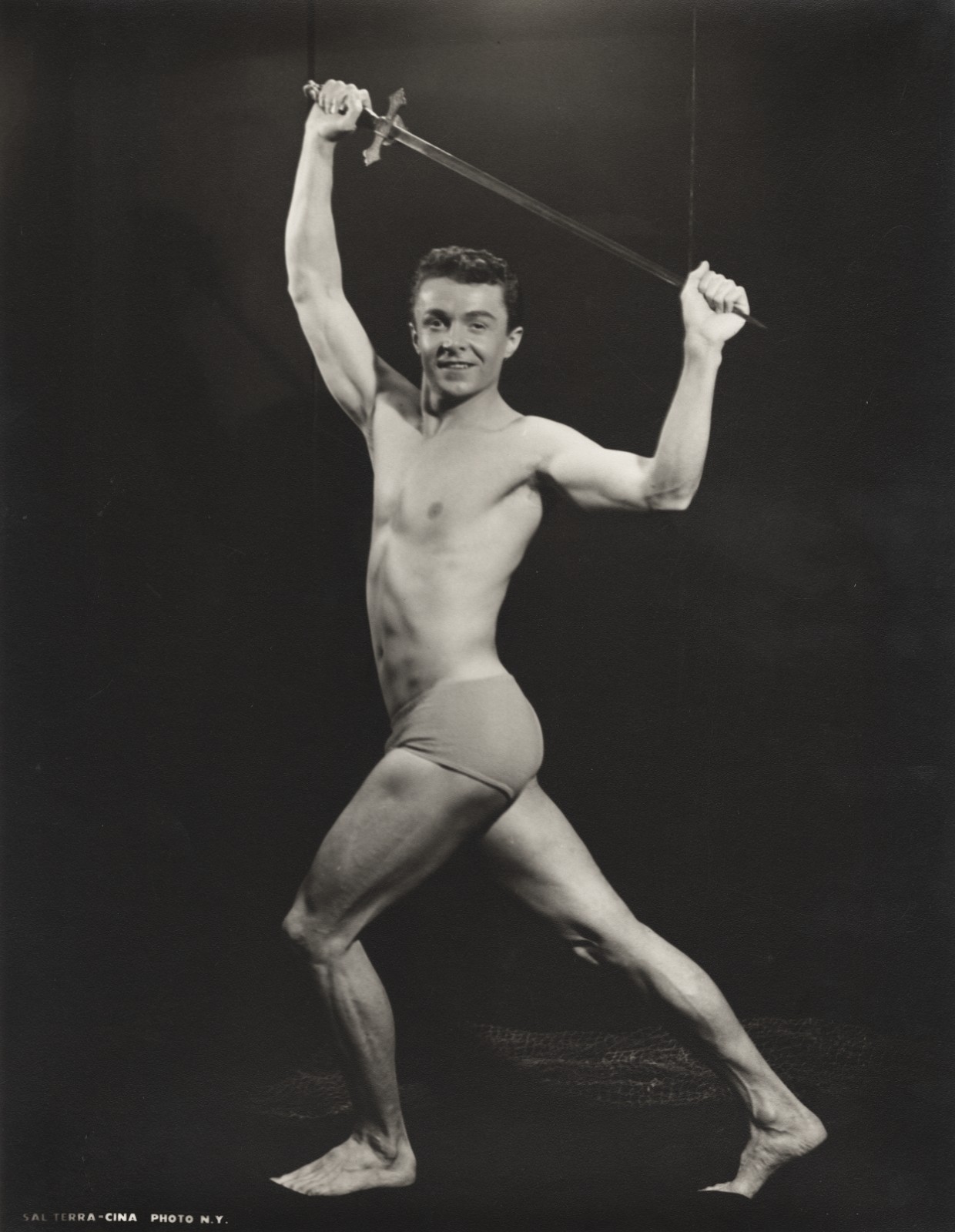
 c. 1950's Bodybuilder Holding Sword Overhead Large Photograph by SAL TERRACINA For Sale
When you click on links to various merchants on this site and make a purchase, this can result in this site earning a commission. Affiliate programs and affiliations include, but are not limited to, the eBay Partner Network.

c. 1950's Bodybuilder Holding Sword Overhead Large Photograph by SAL TERRACINA:
$150.00
DATE: c. 1950'sPHOTOGRAPHER: Sal Terracina (see bio below)PROCESS: Gelatin SilverSIZE: 11" x 13.875"CONDITION: See photosSHIPPING: Shipping cost is non-negotiable, please consider it when offerding/buying.COMBINED SHIPPING: Yes, I do combine shipping. Additional shipping per item is 20% of the lower shipping cost [For example, if 2 items are purchased that have a $30 and $10 shipping cost each, the combined shipping cost becomes $32 for the 2 items]. If offerding/buying more than 1 item, please wait for an invoice with combined shipping before Terracina(c. 1910s – 1995) was an American photographer, performer, and mask maker whose prolific and unconventional body of work spanned nightclub society, organized crime figures, circus performers, global travel, and homoerotic portraiture. A self-taught artist, Terracina left behind an archive of approximately 80,000 negatives, the majority shot with a 4×5 Speed Graphic camera. Though largely unknown during his lifetime, his work gained renewed attention in the early 21st century following the rediscovery of his archive.Salvador Terracina was born in Elizabeth, New Jersey, the grandson of immigrant Italian puppeteers from the seaside town of Terracina. From childhood he displayed wide-ranging artistic abilities. He made dolls and marionettes, staged puppet shows, and developed an early reputation for apparent mind-reading abilities. A 1932 newspaper profile described his uncanny knack for predicting what teachers would write on the classroom blackboard.Terracina was also musically gifted. Largely self-taught, he could reportedly play the scores of more than 50 operas by ear. As a teenager, he served as organist at his family’s church, though his youth was not without controversy. He spent four months in jail in connection with a bank robbery after a gun used in the crime was discovered under the church organ; he denied involvement.By the 1930s, Terracina was performing piano and mind-reading acts in bars and nightclubs across New Jersey and New York, sometimes under stage names such as “Salterra” and “The Great Saltarr.” He promoted himself as “The Internationally Famous Pianist, Psychist, Artist Salvador Terracina.” His act attracted the attention of organized crime figures, including associates of crime boss Lucky Luciano, who brought him to perform in Chicago at the Otis Beer Tunnel, a speakeasy. Mobsters reportedly hoped his mind-reading abilities might aid illegal betting operations. Although his predictions were not always accurate, he remained in their favor and survived the experience.During this period, Terracina increasingly turned his attention to photography. Initially using a folding pocket camera, he later adopted a 4×5 Speed Graphic. He photographed nightclub patrons, gangsters, and performers, often projecting the images as lantern slides as part of his act. These early works are characterized by directness and vivid depictions of nightlife culture.In addition to performing and photographing, Terracina created hundreds of papier-mâché masks, many with exotic or grotesque features. He reportedly developed a unique chemical mixture to strengthen the masks, contributing to their preservation. His masks were used in his own performances and as set decorations in Broadway productions such as Tobacco Road and Uncle Tom’s Cabin, as well as at the 1933 Chicago World’s Fair.In 1948, Terracina joined the traveling carnival World of Mirth after filling in for an absent circus organist. He eventually became deeply involved with the operation, performing as both musician and mentalist. The carnival provided fertile photographic material. He documented performers including clowns, dwarfs, burlesque dancers, and sideshow attractions such as Irma the Body. His images from this period depict circus life with theatrical flair and a fascination with spectacle and marginality.In 1951, Terracina opened a portrait studio in Manhattan, specializing in actor headshots. Among those he photographed were future stars such as Gene Hackman, James Earl Jones, Frances Sternhagen, and Ed Asner. Soon afterward, he became the official photographer for the Seafarers International Union, traveling extensively to remote locations including Borneo, Ecuador, Zanzibar, Haiti, Cambodia, and the Belgian Congo. His photographs from this period depict Indigenous communities, ritual practices, and daily life, sometimes including self-portraits in which he appears impeccably dressed amid jungle or village settings.In later years, Terracina spent considerable time in Key West, Florida, where his brother Anthony (“Captain Tony”) owned Captain Tony’s Saloon, a bar once frequented by Ernest Hemingway. Terracina socialized with local literary and entertainment figures including Truman Capote, Tennessee Williams, Shel Silverstein, and Paul Lynde. During this period, he produced a distinctive series of homoerotic photographs, often staging young men in nautically themed or pseudo-classical costumes of his own design. These works combined camp aesthetics, theatrical staging, and fetishistic elements.Sal Terracina died in 1995. In 2002, his longtime partner transferred his archive—comprising tens of thousands of negatives, prints, and hundreds of masks—to his grandnephew Keith Terracina. The rediscovered body of work drew the attention of German publisher Taschen, which announced plans to publish monographs devoted to his photography. Terracina’s legacy encompasses a vast and eclectic visual record of 20th-century subcultures, performance, sexuality, and travel. Though he remained largely outside mainstream photographic recognition during his lifetime, his rediscovered archive has positioned him as a distinctive and unconventional figure in American photography.
|
|
Other Related Items:
Related Items: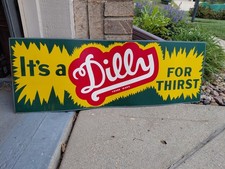
c.1950s Original Vintage Dilly Soda Sign Metal Its A Dilly For Thirst NOS Coke $399.00
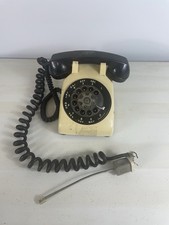
1950s WESTERN ELECTRIC C/D 500 BLACK & White Rotary Dial Desk Table Telephone $35.00
USS Nautilus North Pole Commander WR Anderson Officers Briefing c1950s Photo $100.19
|