When you click on links to various merchants on this site and make a purchase, this can result in this site earning a commission. Affiliate programs and affiliations include, but are not limited to, the eBay Partner Network.
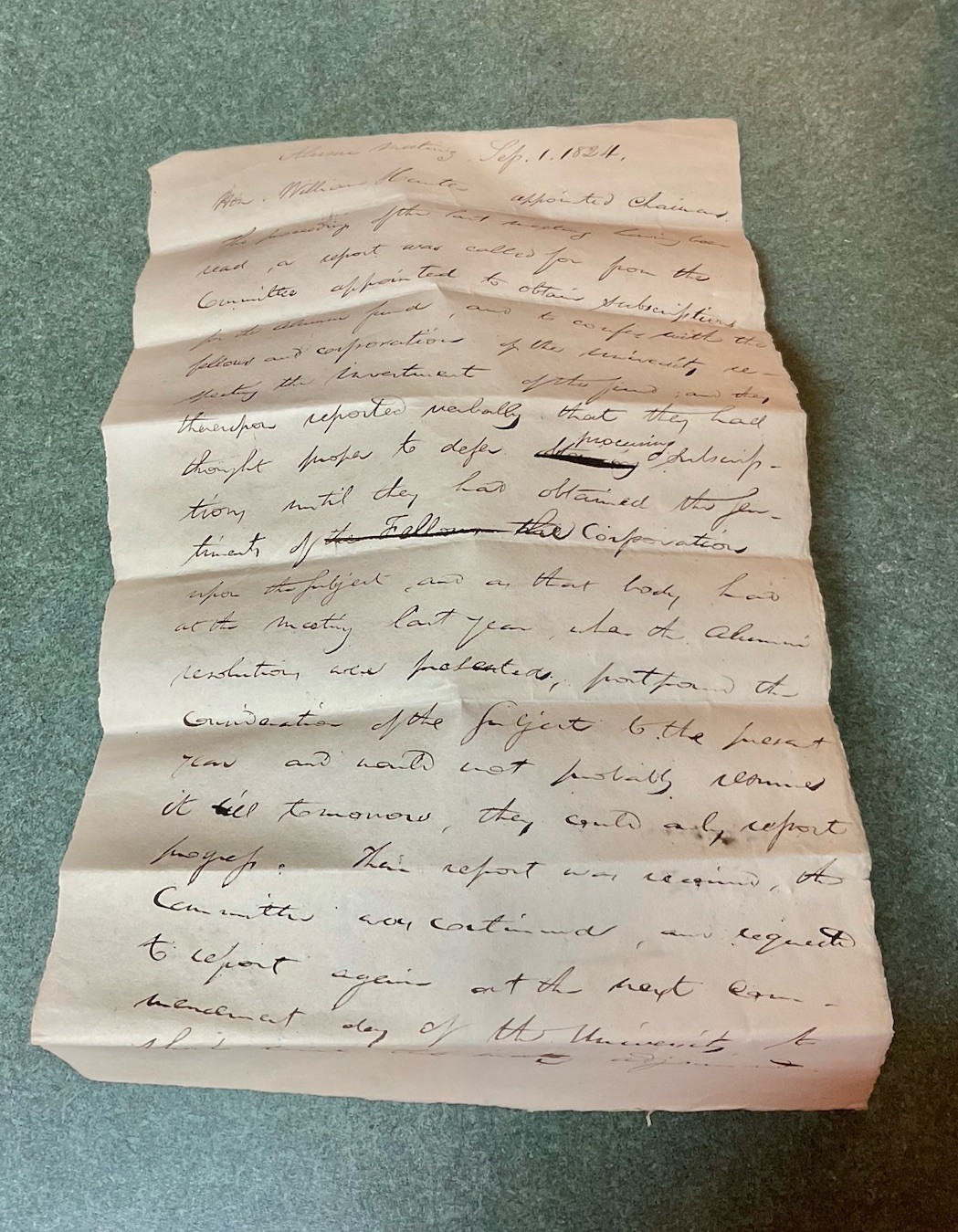
Brown University established the first ever alumni fund in higher education in 1823. The earliest recorded organized effort to secure ongoing financial support from former students. This milestone marked the beginning of modern higher education fundraising and structured alumni philanthropy in the United States.
Obverse Of The Alumni Record -
In 1824, WILLIAM HUNTER—the former U.S. Senator and Newport resident—lived in his family's historic home in Newport and delivered a prominent address to the Rhode Island Society for the Encouragement of Domestic Industry on October 20th, 1824.
Hunter was born in Newport, Rhode Island, as the youngest son of seven children of Debora Malbone Hunter and Dr. William Hunter, a prominent Newport doctor, scholar and merchant. He attended the Rogers School and graduated from the College of Rhode Island and Providence Plantations (the former name of Brown University) at Providence in 1791. In 1791 he went to England to study medicine, but when he arrived there he changed his mind and studied law. He returned to the United States in 1793 and established a law practice in Newport. He was a member of the Rhode Island General Assembly from 1799 to 1812, a member of the United States Senate from Rhode Island from 1811 to 1821, and a member of the Rhode Island House of Representatives from 1823 to 1825. Hunter had been elected by the state legislature to the United States Senate in 1811 after a senator resigned, and elected to a full term in 1814. On June 17, 1812, he was one of 13 senators who voted against declaring war against Britain. He was a member of the United States Federalist Party in the Senate, and served as chairman of the Commerce Committee from 1815 to 1817.
Hunter was elected a member of the American Antiquarian Society in 1815.
He was a member of the Artillery Company of Newport, a militia unit to which many of Newport's leading citizens belonged.
After leaving the Senate, Hunter continued to practice law in Newport. In 1836, he was appointed by President Andrew Jackson to be the United States representative to Brazil. He served in this position for 9 years, through multiple presidents, until 1845, and then returned to Newport, where he died four years later. Hunter is buried in the Trinity Church graveyard.
Information about Hunters political beliefs and activities while in the Senate are not easily available. One opinion that he is known for is that he believed that the state of Massachusetts was exaggerating its role in the Revolutionary War.
Reverse Of The Alumni Record -
September 1824 marked the precise turning point into the new academic cycle where the university permanently transitioned away from broadsides to publishing the catalog exclusively in formal book/volume structures.
On this exact date, the Marquis de Lafayette was traveling through New England on his famous "Last Man" Grand Tour of the United States. While Lafayette spent September 1, 1824, being honored in New Hampshire, his presence heavily impacted Brown University. Only days prior (August 23–24), Lafayette was given a massive reception and ball in Providence. During this exact window, regional Ivy League and colonial colleges (such as Bowdoin on Sept 1) formally voted on or conferred special honorary doctorates and prizes—a movement that heavily influenced future endowments at Brown, including the Lafayette Sabine Foster Prize.
On September 7, 1825, the Marquis de Lafayette departed from Washington, D.C., concluding his triumphant 13-month farewell tour of the United States.
On September 7, 1825, Brown University held its annual Commencement Day exercises. Historically, Brown was unique among early American colleges for holding its graduation ceremony at the beginning of the academic year in September rather than the end of the spring term.
Key Highlights of September 7, 1825
The Graduating Class: A small class of young men officially graduated from the institution. Among the notable graduates that day was Barnas Sears (Class of 1825), who later became a prominent theologian, President of Brown University (1855–1867), and a foundational leader in expanding American public education.
On this exact same day, incoming students officially enrolled to begin their studies. Notably, future Rhode Island Governor Elisha Dyer entered the university as a 14-year-old freshman on September 7, 1825, later graduating in 1829.
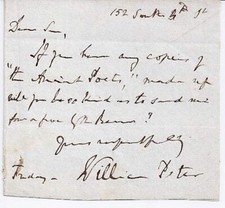
SAMUEL WARD KING was born in Johnston, Rhode Island. He attended Brown University but did not graduate, instead choosing to study medicine. He served as a surgeon during the War of 1812. In 1820 he was elected Town Clerk of Johnston. In 1838 he was elected to the Rhode Island Senate, from which he assumed the governorship when the legislature failed to choose from among three candidates who had each failed to win fifty percent of the vote and to select a Lieutenant Governor. He was, however, elected to three additional terms. During King’s administration, the Dorr Rebellion [which, led by Thomas Dorr, sought to extend suffrage to non-propertied men] took place, and Dorrites chose their own governor. King requested help from the federal government, which recognized him as the lawful governor. When Dorr and his followers made a move to take power, King proclaimed martial law and Dorr’s army was dispersed. Although the Dorr Rebellion had failed, King retired from the governorship and a more liberal state constitution was ultimately adopted.
In the 1800’s people practiced usage of all space on letters or recorded documents. Paper was expensive and often times low on quantity. When a journal was completed, it was standard practice to conserve and expected for one to flip the journal pages and rotate the book upside down to begin using the backs of the paper to continue their writings.
It was also customary for archivists and historians during the 1700’s and 1800’s to utilize pencils and make catalogued notes on a document. Modern archivists and historians rather use acid free slips or digital tags instead.
Lot#2