When you click on links to various merchants on this site and make a purchase, this can result in this site earning a commission. Affiliate programs and affiliations include, but are not limited to, the eBay Partner Network.
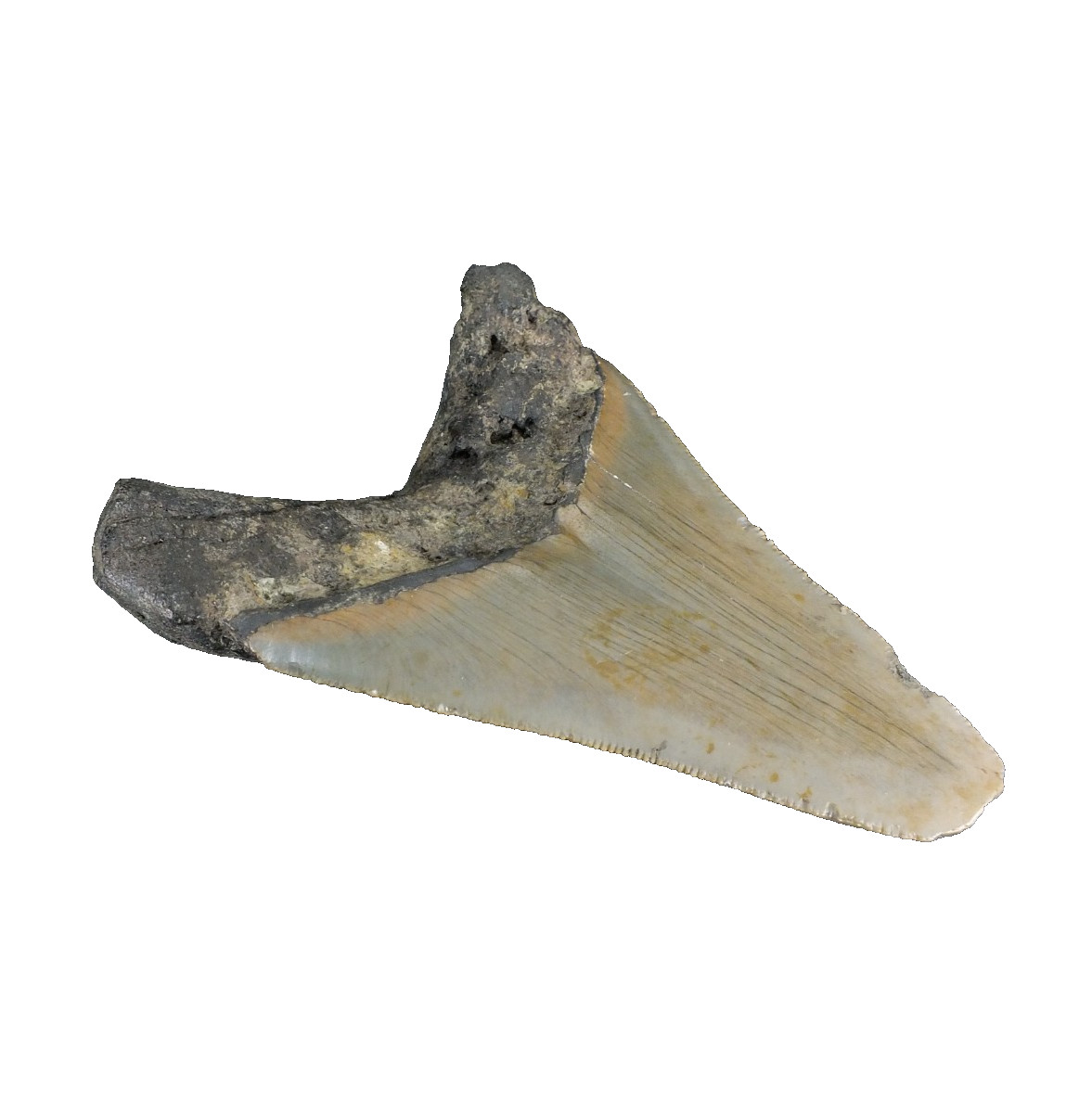
archarocles megalodon (Agassiz, 1843), originally described as Carcharodon megalodon by Louis Agassiz in 1843, is represented here by a well-preserved tooth measuring approximately 89 mm in slant height and weighing 95 grams. The crown is triangular and robust, with clearly defined serrated cutting edges and a distinct lingual bourlette separating the enamel from the root. The enamel surface exhibits natural Miocene phosphatic mineralisation and has not been artificially enhanced. The bilobate root is intact and structurally sound, displaying symmetrical lobes and solid development consistent with a mature individual. Overall morphology conforms to the established diagnostic characteristics of Carcharocles megalodon.
This specimen was recovered from “The Ledge,” Atlantic Ocean offshore North Carolina, USA, within deposits assigned to the Hawthorne Formation. The Hawthorne Formation is Miocene in age, dating approximately between 23 and 6 million years ago, and represents shallow marine depositional environments characterised by phosphatic sands and silts accumulated in warm subtropical coastal systems. These marine settings supported diverse vertebrate faunas including large lamniform sharks. Teeth of Carcharocles megalodon from this formation are typically derived from consolidated strata exposed along submarine ledges and are commonly recovered through offshore diving operations.
At 89 mm in slant height and weighing 95 grams, this tooth falls within the mid-size range for the species and represents a mature individual. The specimen presents as complete, with crown and root intact and structurally stable. Serrations remain visible along the cutting edges and the bourlette is well preserved, allowing confident taxonomic identification. Minor natural wear consistent with marine deposition may be present but does not detract from diagnostic clarity. As a loose fossil element, the tooth displays cleanly for study and contributes proportionally to a size-diverse Megalodon assemblage.
Collected in the 2000s from offshore North Carolina, this specimen derives from one of the most historically productive Miocene marine units in North America for Neogene lamniform shark material. Carcharocles megalodon represents one of the most significant macropredatory sharks of the Neogene fossil record and has undergone several generic reassignments reflecting ongoing phylogenetic discussion; however, Carcharocles remains a widely accepted and stable treatment within both academic and advanced collector contexts. Dating to the Miocene epoch (approximately 6–23 million years ago), this tooth represents a characteristic example of one of the largest predatory sharks known from the fossil record. Its documented locality, stratigraphic context, and solid preservation situate it securely within established scientific literature and North American Miocene collecting traditions