When you click on links to various merchants on this site and make a purchase, this can result in this site earning a commission. Affiliate programs and affiliations include, but are not limited to, the eBay Partner Network.
The tooth is attributed to the Hawthorne Formation and broadly dated to the Miocene Epoch, approximately 23–6 million years ago under the supplied collection data. Hawthorne deposits record shallow marine and marginal-marine environments across the southeastern United States, with phosphatic sediments preserving abundant remains of sharks, rays, marine mammals and other vertebrates. Because the specimen was recovered offshore rather than from a documented bed or measured stratigraphic section, assignment below formation level cannot be justified from the available provenance.
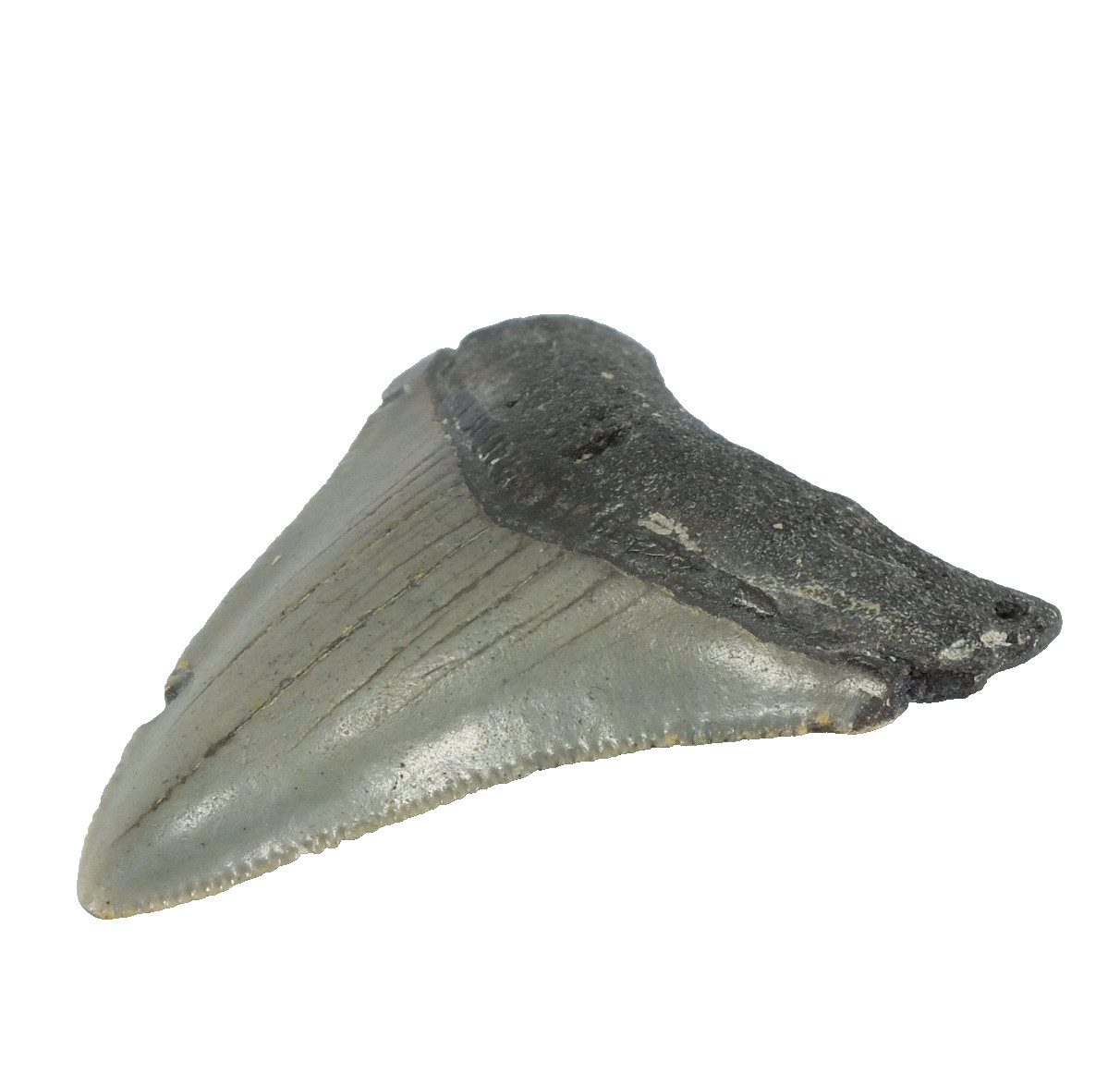
At approximately 59 mm in slant height, the tooth represents a substantial example suitable for study and display. Its 20-gram weight is consistent with a mineralised fossil tooth of the stated dimensions. The specimen’s precise jaw position, orientation, degree of abrasion and preservation quality cannot be established without direct visual examination; accordingly, these characteristics are intentionally left undescribed rather than inferred. Any stabilisation, repair or restoration should be assessed from the physical specimen itself.
Specimen EA10674 is recorded as originating from “The Ledge,” an Atlantic Ocean collecting area offshore North Carolina, United States of America. Fossil teeth from this offshore locality are commonly recovered from reworked marine sediments, meaning the stated Hawthorne Formation and Miocene age should be understood as collection-provenance information rather than a bed-by-bed stratigraphic determination. With its recorded locality, dimensions and catalogue number preserved, the specimen forms a documented example of the large lamnid-grade sharks that occupied Miocene marine ecosystems of eastern North America.